TAPP Urges Congress to Reject Proposals & Amendments to Impose “Most Favored Nation” Drug Pricing Policies
Ahead of an expected U.S. Senate “vote-a-rama” on May 21, the Trade Alliance to Promote Prosperity today wrote to member of Congress, urging them to reject proposals and amendments to impose “most favored nation” drug pricing policies.
Here is the text of TAPP’s letter.
Dear Members of Congress and Staff:
On behalf of the Trade Alliance to Promote Prosperity, I write to urge you to reject proposals and amendments to impose “most favored nation” (MFN) drug pricing policies in the United States.
While the goal of lowering prescription drug costs is important and widely shared, importing foreign price-control systems into the American healthcare market would ultimately harm patients, weaken medical innovation, and reduce the development of future lifesaving treatments.
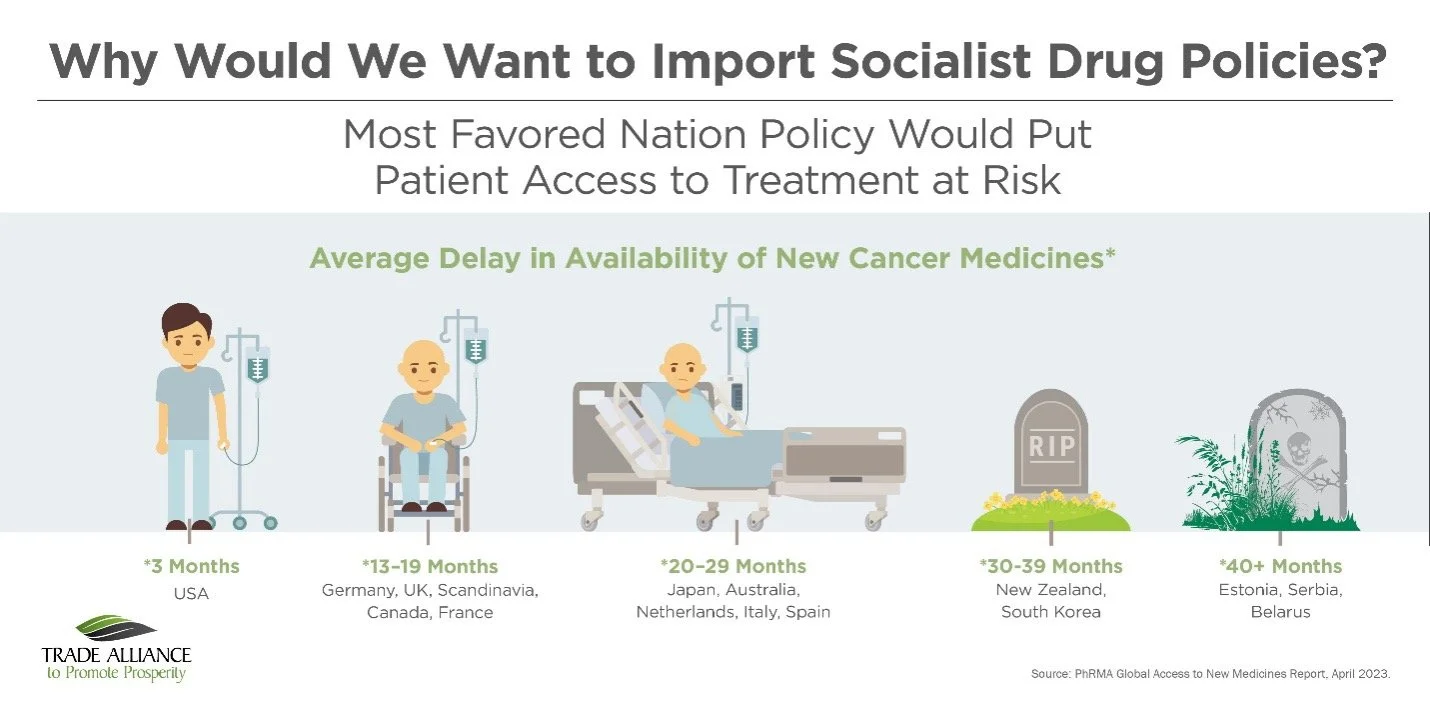
Under MFN pricing proposals, the United States would tie the prices of medicines here to the lower government-controlled prices imposed in foreign countries. However, lower prices abroad are often the product of strict government price caps, delayed access to new therapies, and rationed healthcare systems. Many countries simply refuse to pay market rates for innovative medicines, relying instead on American investment and innovation to sustain global pharmaceutical research and development.
The United States currently leads the world in the development of breakthrough drugs and advanced medical treatments because our system rewards innovation and risk-taking. That leadership benefits not only Americans, but patients across the globe. Weakening the economic incentives that support pharmaceutical research would almost certainly lead to fewer new cures, fewer clinical trials, and slower medical progress. Experts and industry leaders have repeatedly warned that MFN pricing could reduce investment in research and development, particularly among smaller biotechnology firms responsible for many cutting-edge discoveries.
This debate is not simply about economics. It is about patient outcomes and human lives. Delays in developing new cancer therapies, neurological treatments, and rare-disease medications carry real consequences for families waiting for hope. Americans benefit from being first in line for many new treatments precisely because the U.S. market supports the costs of medical innovation.
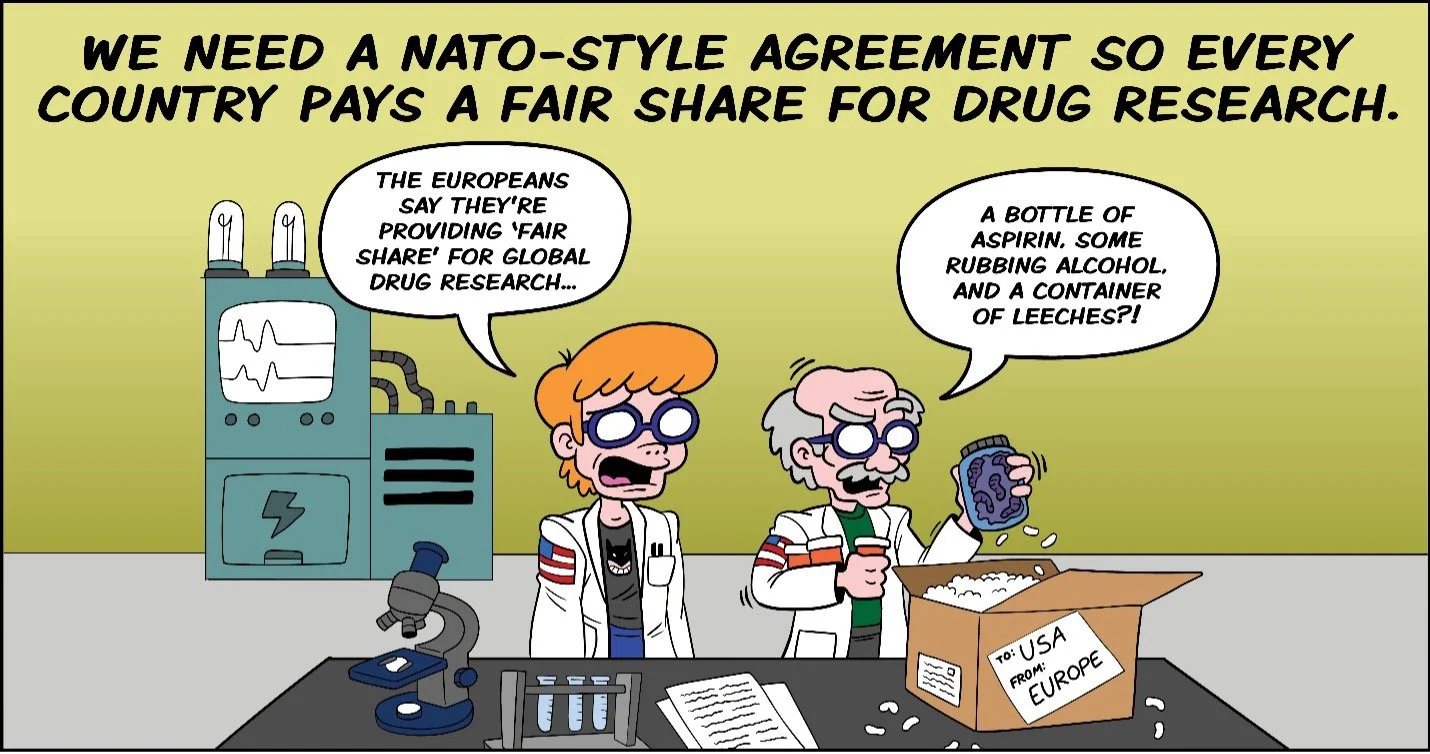
There are better ways to reduce drug costs without undermining innovation. Congress should focus on increasing market competition, accelerating generic and biosimilar approvals, improving pricing transparency, reforming pharmacy benefit manager practices, and pressuring foreign governments to contribute more fairly to the global cost of pharmaceutical innovation.
Even some critics of current pricing structures acknowledge that foreign governments frequently underpay for medicines while American consumers shoulder a disproportionate share of research costs.
Congress should pursue reforms that make medicines more affordable while preserving America’s position as the global leader in medical innovation. Our objective should not be to import the weaknesses of foreign healthcare systems, but to ensure that American patients continue to have access to the world’s most advanced treatments and future cures.
Thank you.