New TAPP Cartoon: 340B Is Unsustainable, Needs Reform
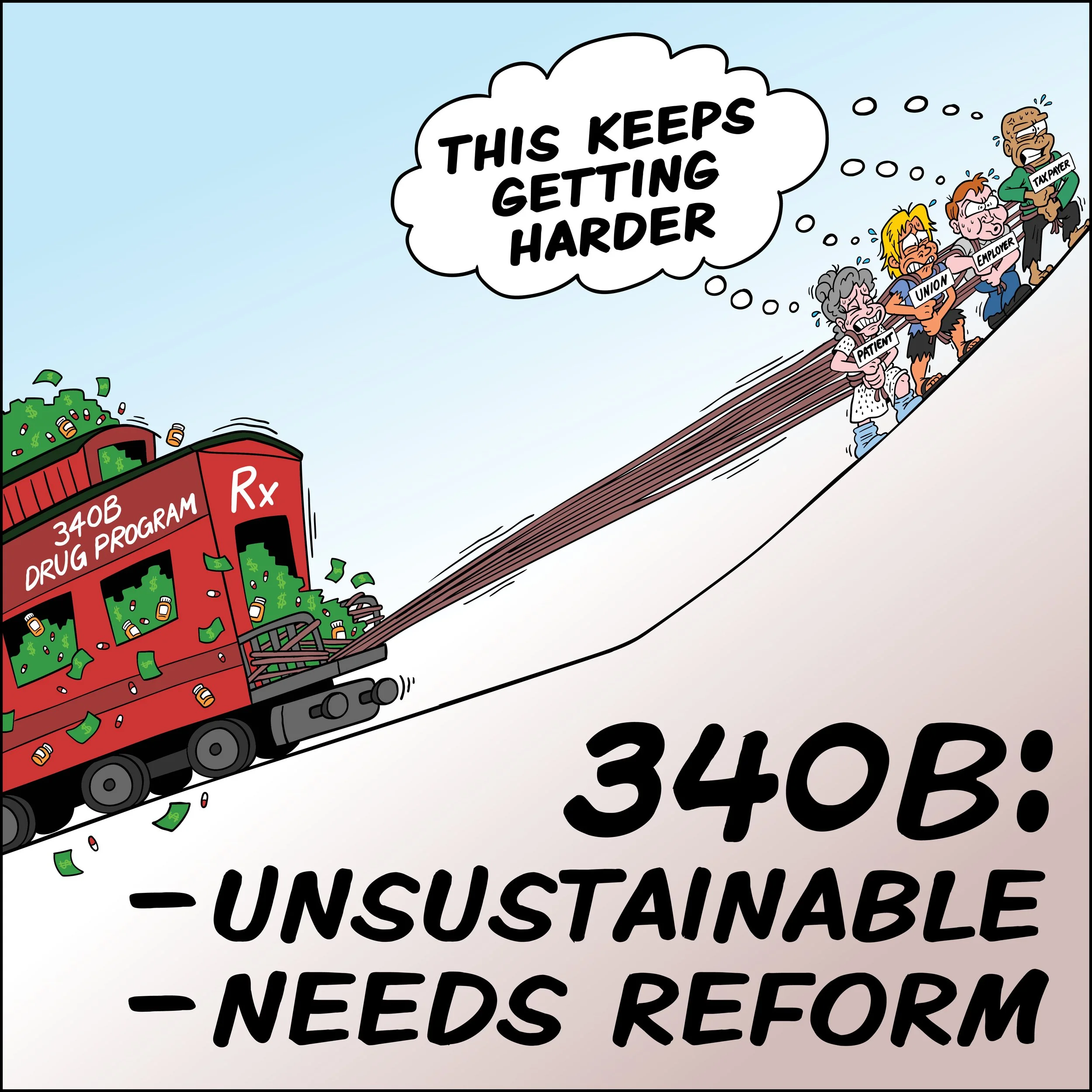
The 340B drug pricing program was created with a simple and worthy goal: help hospitals and clinics serving low-income and uninsured patients purchase prescription drugs at steep discounts so they could stretch limited resources and provide more care. The Trade Alliance to Promote Prosperity has created an editorial cartoon to illustrate the issue.
Today, 340B has become one of the most convoluted, opaque, and controversial programs in American health care.
What started in 1992 as a narrowly targeted safety-net initiative has exploded into a sprawling multibillion-dollar enterprise with minimal oversight and deeply distorted incentives. Prescription purchases through the program have surged from roughly $6.6 billion in 2010 to more than $80 billion in 2024.
The core problem is that the program no longer consistently functions as Congress intended.
Under 340B, participating hospitals can buy drugs at heavily discounted prices but still charge insurers and patients full price, keeping the difference as profit. In theory, those savings are supposed to support vulnerable populations and expand access to care. But there is remarkably little transparency about where the money actually goes, and the financial burden of the program ultimately falls on patients, taxpayers, unions, and employers.
There is no universal requirement that hospitals pass savings directly to patients at the pharmacy counter. There is also limited reporting on how much 340B revenue is used for charity care versus general operating expenses, acquisitions, or administrative overhead. Critics across the political spectrum have pointed to the absence of meaningful accountability.
The result is a system riddled with perverse incentives.
Large hospital systems have increasingly acquired physician practices and outpatient clinics, converting them into 340B-eligible sites. Research and policy analysts argue that the program now actively encourages hospital consolidation, driving independent practices out of the market while increasing health care costs overall.
Even more troubling is the explosion of contract pharmacies. A 2010 policy change allowed hospitals to partner with virtually unlimited outside pharmacies to dispense 340B drugs. That dramatically expanded the program but also created enormous compliance and transparency concerns. Drug manufacturers, policymakers, and watchdog groups have raised alarms about duplicate discounts, weak auditing standards, and the growing role of for-profit middlemen.
None of this means the original mission of 340B is unimportant. Many rural hospitals, community health centers, and safety-net providers genuinely rely on the program to help keep services available for vulnerable patients. Supporters argue that the discounts help hospitals “stretch scarce federal resources” and maintain critical care access.
But acknowledging that reality does not require ignoring the program’s serious flaws.
A federal program this large should not operate with so little transparency. Policymakers and patients alike deserve to know whether discounted drugs are truly benefiting the populations Congress intended to help. Reform should focus on restoring accountability, requiring clearer reporting, ensuring savings reach patients, and preventing the kinds of market distortions that fuel consolidation and rising costs.
The status quo is unsustainable. 340B has become a mess—not because helping vulnerable patients is the wrong goal, but because Washington allowed a targeted safety-net program to evolve into a loosely supervised financial windfall for large health systems and corporate intermediaries.
340B as currently operating is unsustainable. Real reform is long overdue.