Congress: Stop Letting the World Freeload Off American Patients
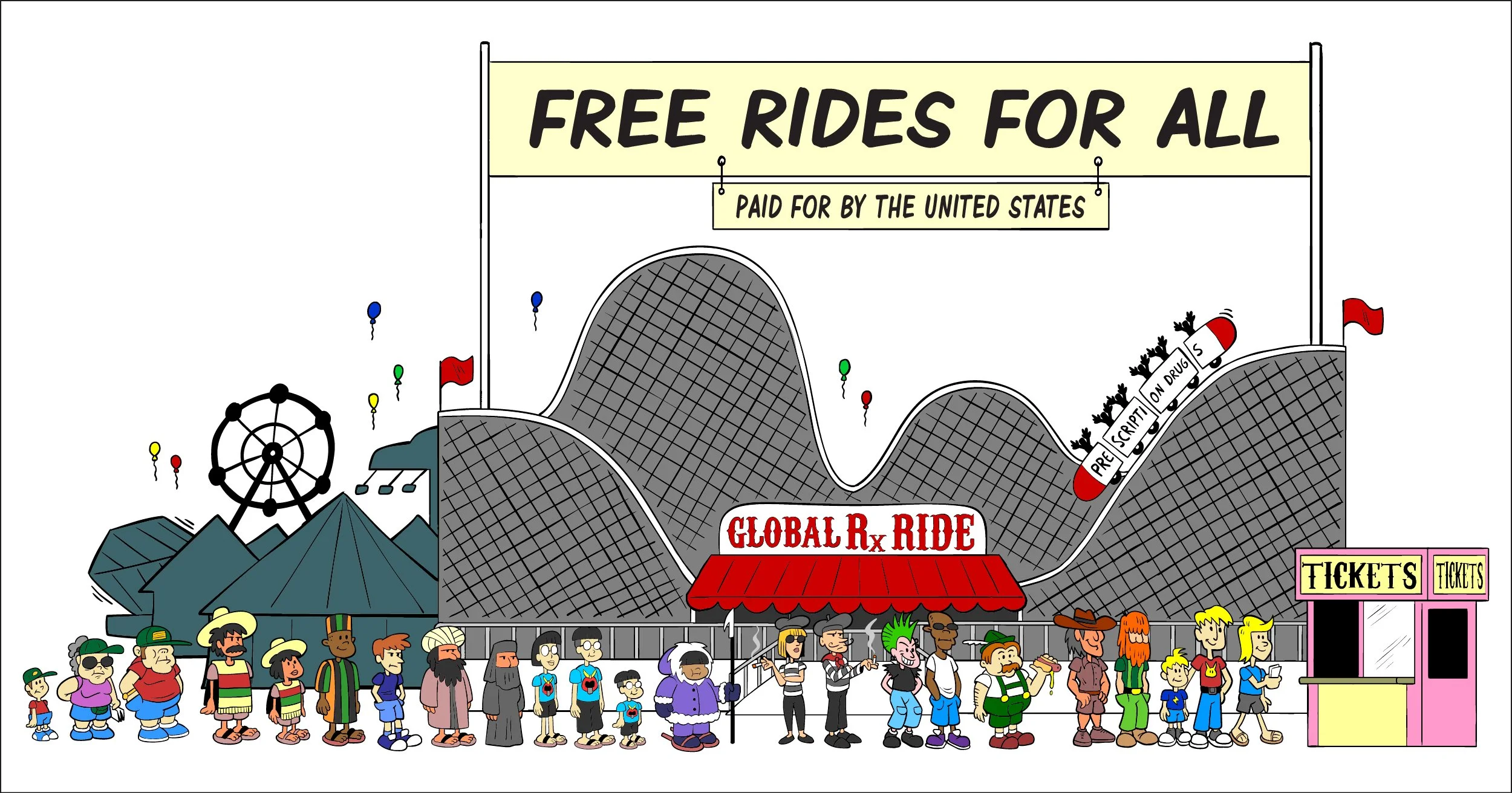
The Trade Alliance to Promote Prosperity is calling on Congress to stop letting the world freeload off American patients. On a global scale, the United States has a bunch of freeloading friends when it comes to paying for prescription drugs. Foreign governments routinely enforce low drug prices in their countries, while expecting U.S. patients and taxpayers to underwrite the costs of research, development, and commercialization.
To gain access to big foreign markets, drugmakers accept lower margins abroad and shift to the United States the burden of paying for innovation and bringing the drugs to market. This dynamic has long been called out as a “free ride” on American innovation efforts.
This is a structural distortion in the global pharmaceutical market, and unless U.S. policymakers respond smartly, the United States risks undercutting the very innovation that powers modern medicine.
The empirical link between pharmaceutical income and R&D investment is strong. Studies have found that countries imposing controls tend to see declines in drug approvals and reduced industry investment. If we let global price controls erode the margins that support R&D, we risk a future with fewer cures, greater disease burden, and more early deaths.
Some proposed reforms aim to tie U.S. drug prices to the prices paid in foreign countries—so-called “most-favored-nation” (MFN) or international reference pricing (IRP). While these approaches sound like they would level the playing field, they effectively import the very socialist pricing policies that embrace the freeloader logic. The result would be a severe suppression of patient access, R&D investment, and new cure development.
Instead, Congress could push for increased transparency and benchmarking of true R&D costs. Too much of the public debate treats higher U.S. prices as simple corporate greed, ignoring that R&D is capital-intensive, risky, and long-term. Policymakers should require drug firms to disclose R&D expenditures, success rates, and cost-of-capital assumptions.
In addition, Congress could champion the idea of coordinating with our foreign allies to raise global pricing floors. The freeloading problem is global, so the solution should be global, too. The U.S. should lead coalition efforts—whether through an existing structure like the G7 or Organization for Economic Cooperation and Development (OECD), or through a new global pharmaceutical pricing forum—to establish minimum pricing floors or value-based floor pricing standards. Nations should agree to avoid a race to the bottom, reinforcing the link between sustainable prices and sustainable innovation.