TAPP Urges Treasury: Don’t Let COINS Act Hinder American Medical Leadership
Even as America is locked in an increasingly competitive race with China for leadership in pharmaceutical innovation, the U.S. Department of the Treasury is enacting tougher restrictions on biotechnology transactions involving China.
Unfortunately, new federal regulations could undermine American competitiveness while making it harder for patients to access lifesaving medicines.
Regulations implementing the COINS Act, enacted in December 2025, could open the door to restrictions on licensing agreements, acquisitions, and co-development partnerships that have become essential to American drug innovation. Such restrictions are a serious mistake.
Although biotechnology was not specifically included in the original legislation, Treasury has discretion to expand its scope. Broad restrictions would harm American companies and patients without meaningfully weakening China’s pharmaceutical ambitions.
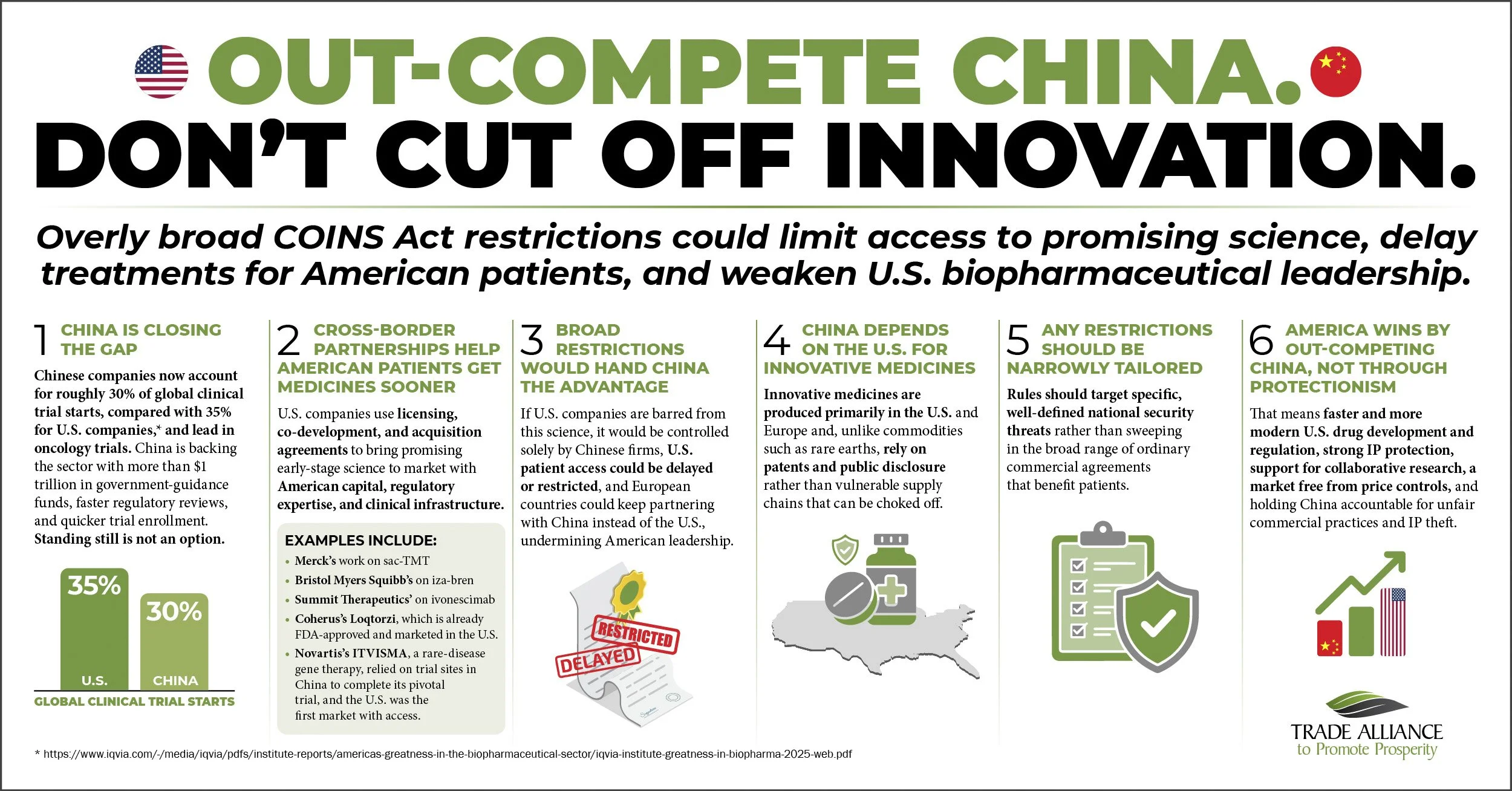
China is already closing the innovation gap. Chinese companies now account for approximately 30 percent of global clinical trial starts, compared with 35 percent for American companies, and lead in oncology trials. China has committed more than $1 trillion through government-guidance funds and prioritized biotechnology in its latest five-year plan.
Rather than retreating, America should capitalize on scientific advances wherever they originate.
American pharmaceutical companies routinely partner with Chinese biotechnology firms to develop promising treatments using American investment, regulatory expertise, and clinical infrastructure. Merck’s sac-TMT, Bristol Myers Squibb’s iza-bren, and Summit Therapeutics’ ivonescimab illustrate the importance of these partnerships. Coherus’s Loqtorzi has already secured FDA approval and reached American patients. Novartis’s rare-disease gene therapy ITVISMA also relied on Chinese clinical trial sites, with American patients receiving first access.
Blocking these partnerships would not stop Chinese innovation. It would simply surrender opportunities to competitors.
European pharmaceutical companies could continue accessing promising Chinese discoveries while American companies face restrictions. Meanwhile, China is considering its own limitations on technology transfers involving advanced therapies, making continued American engagement even more strategically important.
Treasury should target clearly defined national security threats and focus on those rather than focusing on ordinary commercial transactions that accelerate medical breakthroughs.
America’s competitive edge depends on strong intellectual property protections, modernized drug regulation, collaborative research, market-based incentives rather than price controls, and accountability for China’s unfair trade practices.
America can win the pharmaceutical innovation race by out-innovating China, not by isolating itself from promising science.
The COINS Act should protect national security—not become an obstacle to American medical leadership and patient access.