TAPP Calls Out Foreign Price Controls in CMS Medicare Drug Pricing Plans
The Centers for Medicare and Medicaid Services (CMS) recently proposed two major drug pricing models: GLOBE for Medicare Part B and GUARD for Medicare Part D. Together, these policies would introduce significant changes to how drugs are priced, posing serious risks to patients and medical innovation.
Under both proposals, drug manufacturers would be required to participate if their products are selected. CMS would set U.S. drug prices by comparing them to prices in 19 other wealthy countries, many of which use government price controls and limit patient access to medicines. In most cases, CMS would base payments on the lowest foreign price available, unless manufacturers choose to submit confidential pricing data. These lower benchmark prices would be enforced through new mandatory rebates, added on top of existing inflation penalties.
CMS also plans to apply these models in randomly selected geographic areas, which could lead to unequal access and payment rules depending on where a patient lives. The potential impacts include:
Medicare Part B (GLOBE): Lower reimbursement rates could discourage doctors and clinics from providing certain physician-administered drugs, especially high-cost therapies.
Medicare Part D (GUARD): CMS estimates the model could lead to $3.6 billion in higher out-of-pocket prescription drug costs for beneficiaries. Rebates are not expected to be reflected at the pharmacy counter.
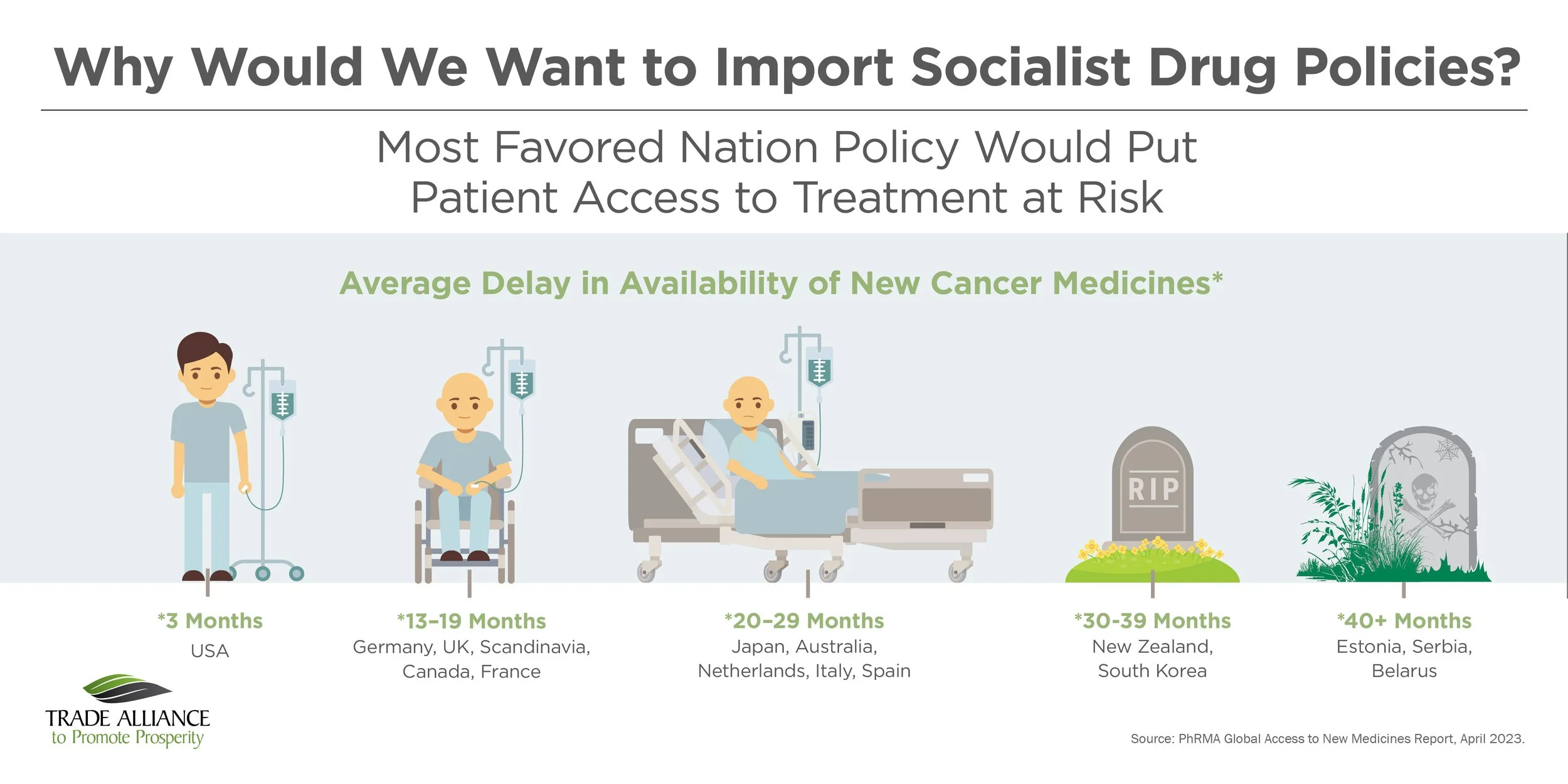
In total, importing socialist drug policies risks replicating the same problems foreign systems face, including restricted access, delayed availability of new treatments, and reduced incentives for medical innovation.
TAPP is calling on policymakers to put their constituents’ well-being first and reject policies that place unnecessary risks on patients and future medical breakthroughs.